Problem 2.1 Principle of Fermat and Snell’s Law.
Consider a layer of thickness and refractive index which is sandwiched between two half spaces with refractive index and as shown in Figure 1. A ray from point with passes through point with .
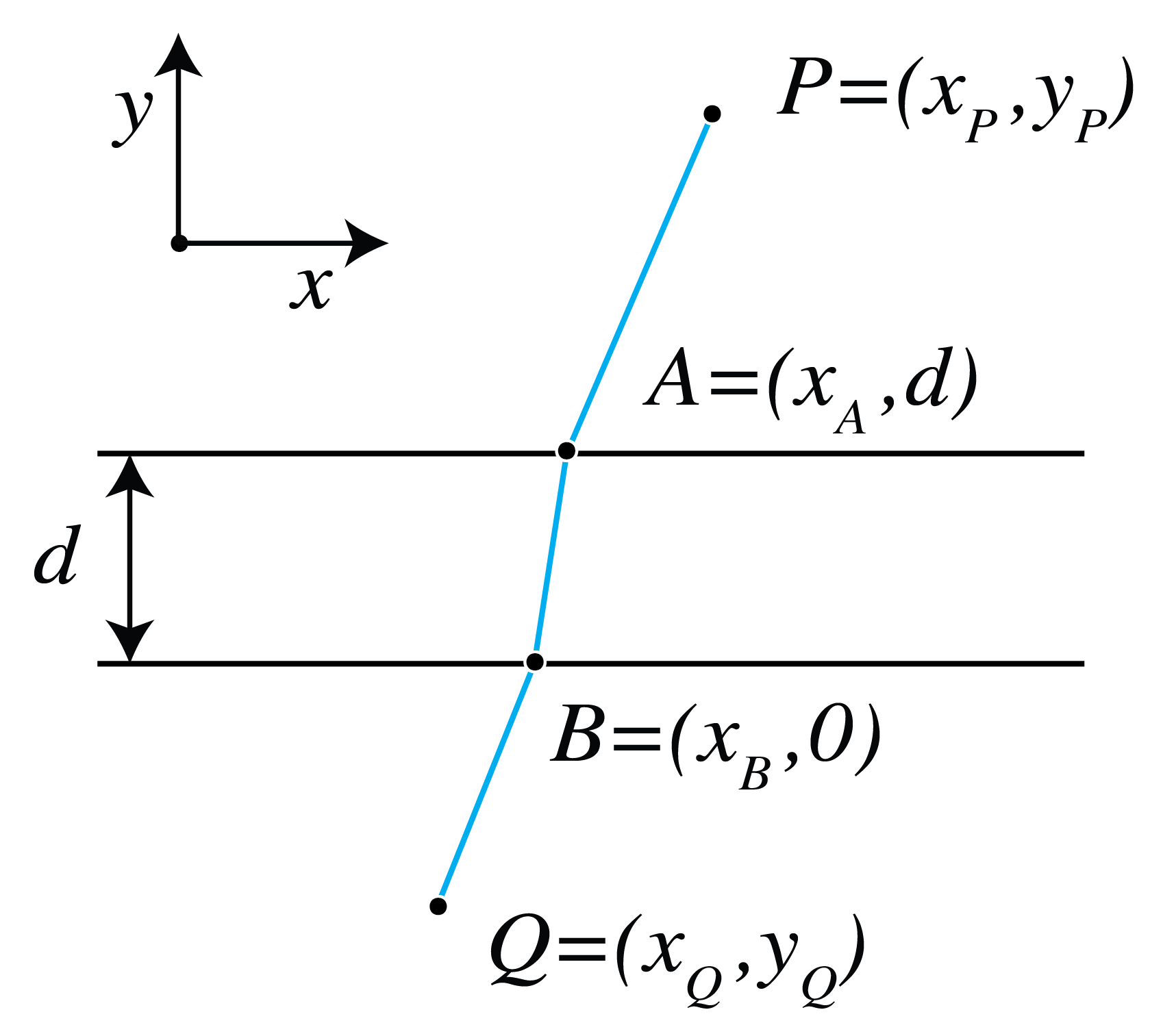
Figure 1:A ray through points and .
(a) Write a formula for the OPL of the ray from to as shown in Figure 1.
(b) Find the equations to be satisfied by and such that the OPL is minimum. Hint: set the partial derivatives of the OPL with respect to and equal to zero.
(c) Express the equations derived under b) in terms of , and and derive that Snell’s Law holds for the angles and :
Note that the relationship between and is independent of the refractive index and the thickness of the middle layer.
(d) Does Snell’s Law Eq. (1)) hold irrespective of the number of layers and their thicknesses in between the two half spaces? Explain your answer.
(e) Derive Eq. (1) by using the boundary conditions for the tangential components of the electromagnetic field, using Maxwell’s boundary conditions for electromagnetic fields.
From electromagnetic theory, the wave trains emitted by different atoms (point sources) in the source suffer random phase jumps due to e.g. collisions and therefore the fields emitted by different point sources in an extended classical light source can not interfere.
Problem 2.2 Perfect focusing by an ellipsoid and a hyperboloid.
Suppose that there are two media with refractive indices and that point is at infinity in the medium with refractive index . We will construct a surface (interface) between the two media such that all rays from are focused into the same point (see Figure 2a). Because is at very large distance, the rays entering from the right are parallel. Since all parallel rays have traveled the same distance when they hit the surface perpendicular to the rays, all parallel rays have the same phase at their intersection points with the plane .
(a) If point is on the interface sought, derive that
the constant is the same for all points on the interface.
(b) Show that by moving the plane parallel to itself we can achieve that for the new plane we get:
(c) Suppose next that . as shown at the right of Figure 2. Show that now, by the same argument as above, the interface is a hyperboloid with as one of its focal points.
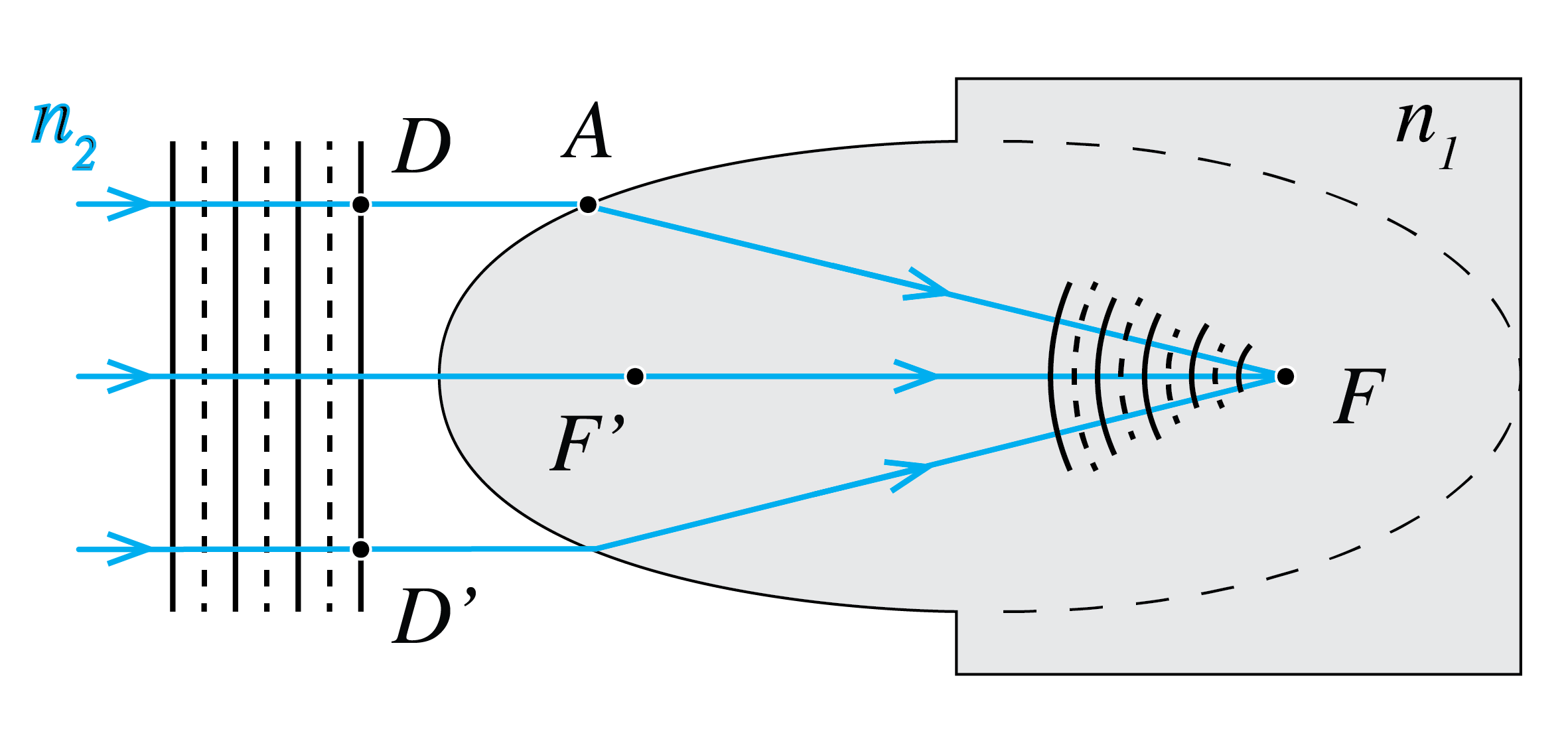
Figure 2:(a) Ellipsoid () and (b) hyperboloid () to perfectly focus a parallel beam incident from the medium with refractive index into a point in a medium with refractive index .
(d) Use the previous results to describe a lens with refractive index and having hyperboloid surfaces which perfectly images two given points S and P in the ambient medium with refractive index .
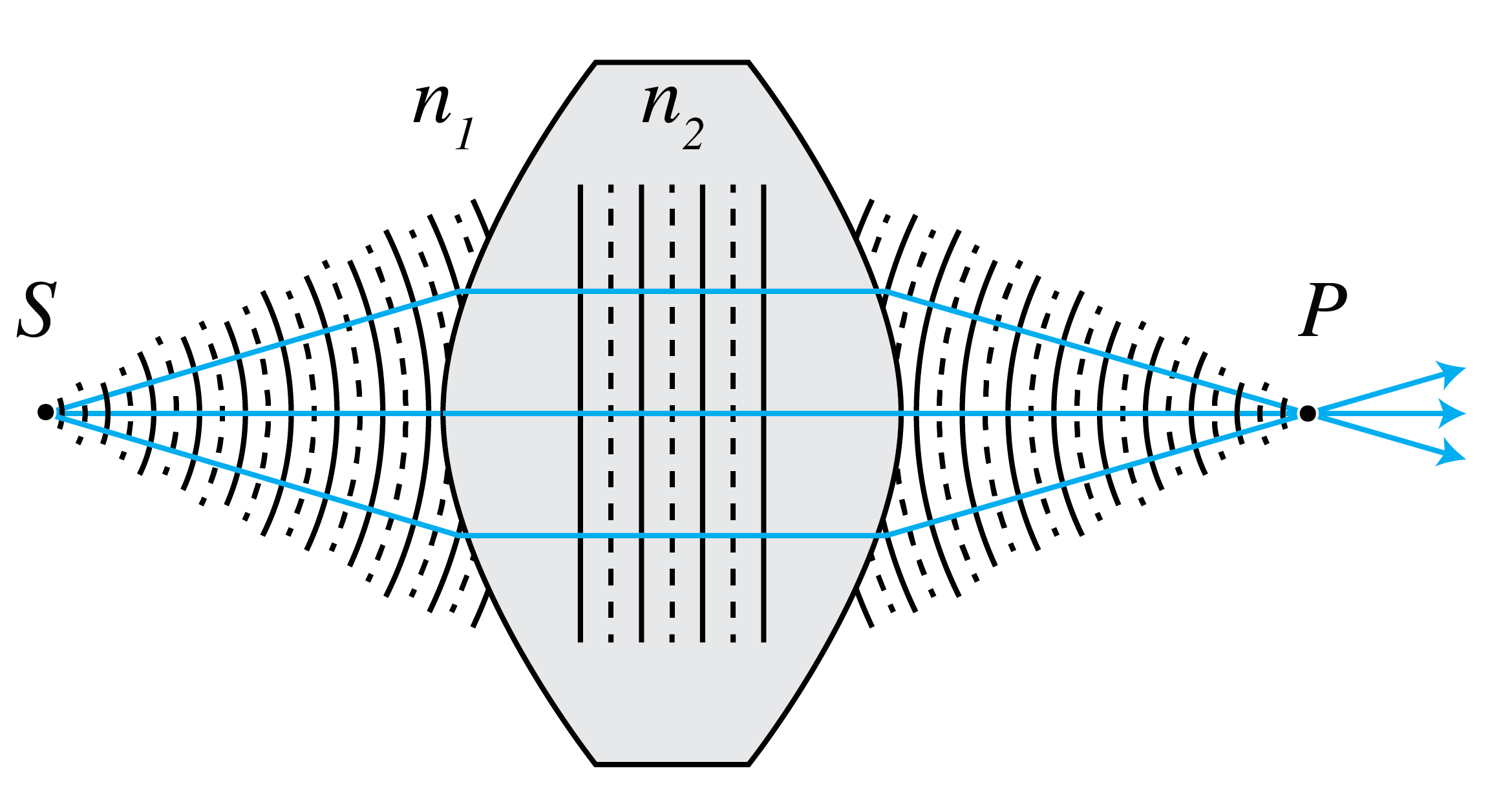
Figure 7:Lens with hyperboloid surfaces for perfect imaging of a pair of points.
Problem 2.3 Perfect focussing by a parabolic mirror
Next we consider perfect focusing of parallel rays in air () by a mirror. Let there be a parallel bundle of rays in air () and suppose we want to focus all rays in point .
(a) We draw a plane perpendicular to the rays as shown in Figure 4. The rays that hit have traversed the same optical path length. Draw a second surface parallel to . Consider rays hitting the mirror in and . Derive that
(b) Derive that
(c) Show that Eq. (3) is satisfied for points for which , and conclude that the mirror is a paraboloid with as focus and as diretrix.
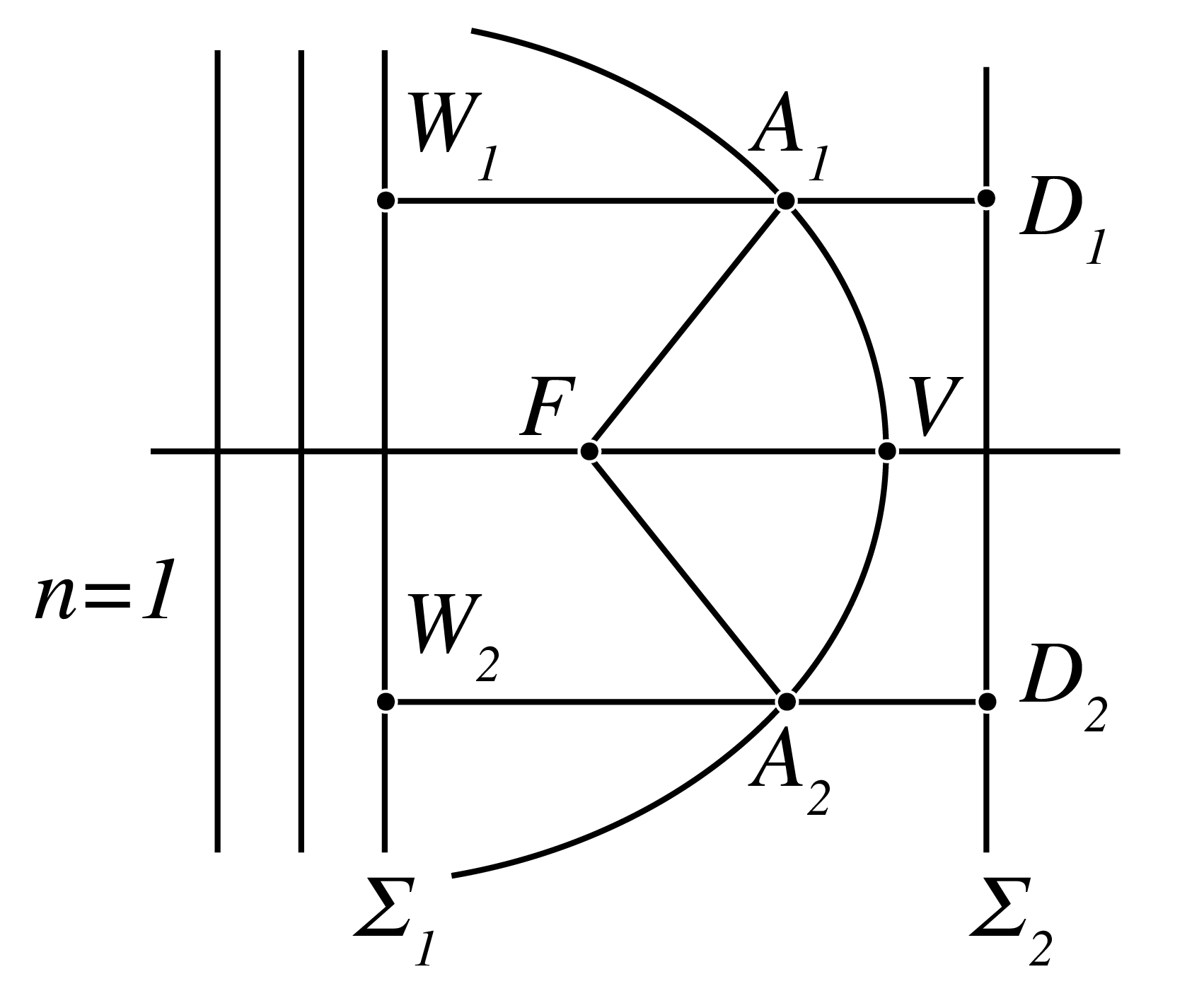
Figure 4:A paraboloid mirror.
Problem 2.4 Imaging of a virtual object.
A virtual object is at a distance behind a converging lens. The converging incident rays to the left of the lens, that correspond to the virtual object, are shown in Figure 5. The lens has focal length .
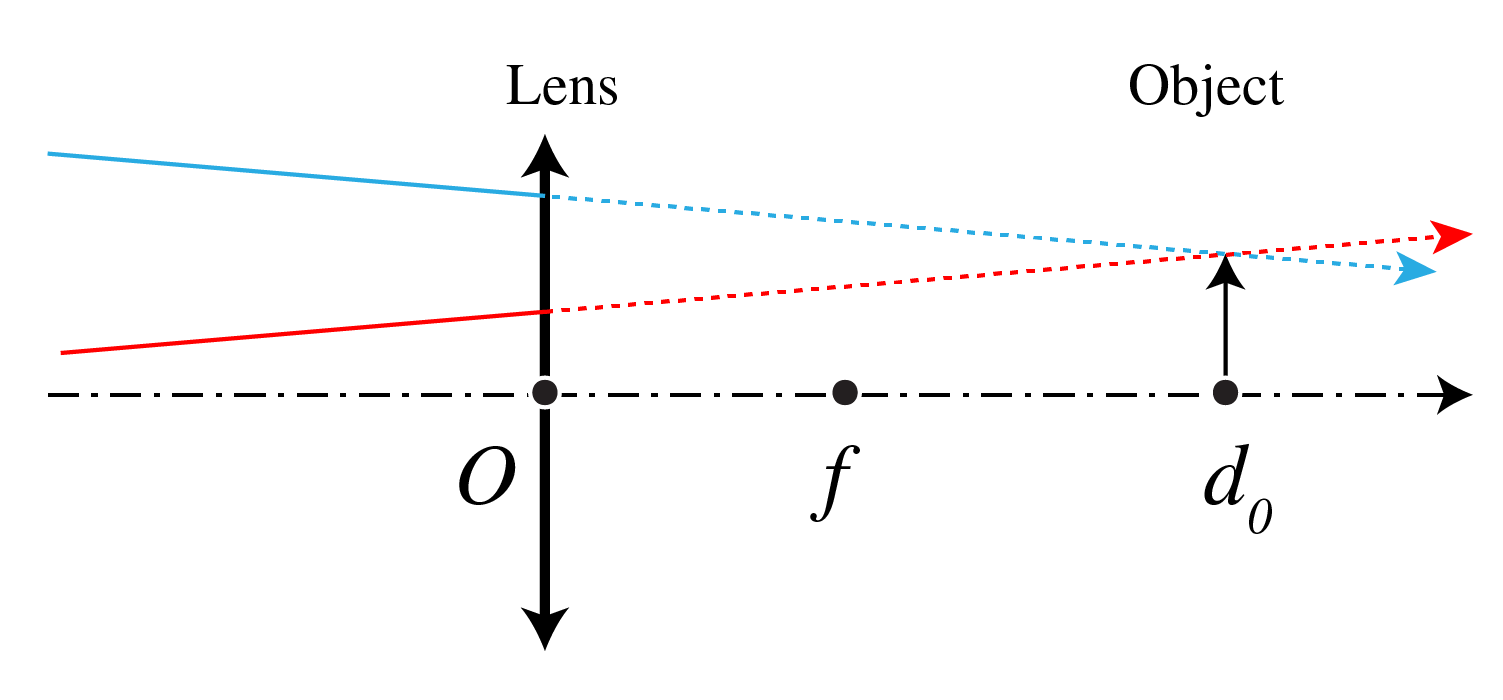
Figure 5:An object is created by incoming rays.
(a) Construct the image when cm, cm and the height of the object 1 cm.
(b) Is the image real or virtual? Inverted or upright?
(c) Calculate the location of the image using the lens formula and compare it with your drawing. What is the magnification?
Problem 2.5 Suppose we have two thin lenses and . Lens is convergent (i.e. positive) with focal distance and lens is divergent (i.e. negative) with focal distance . The distance between the lenses is . Let there be an object at distance in front of lens , as shown in Figure 6.
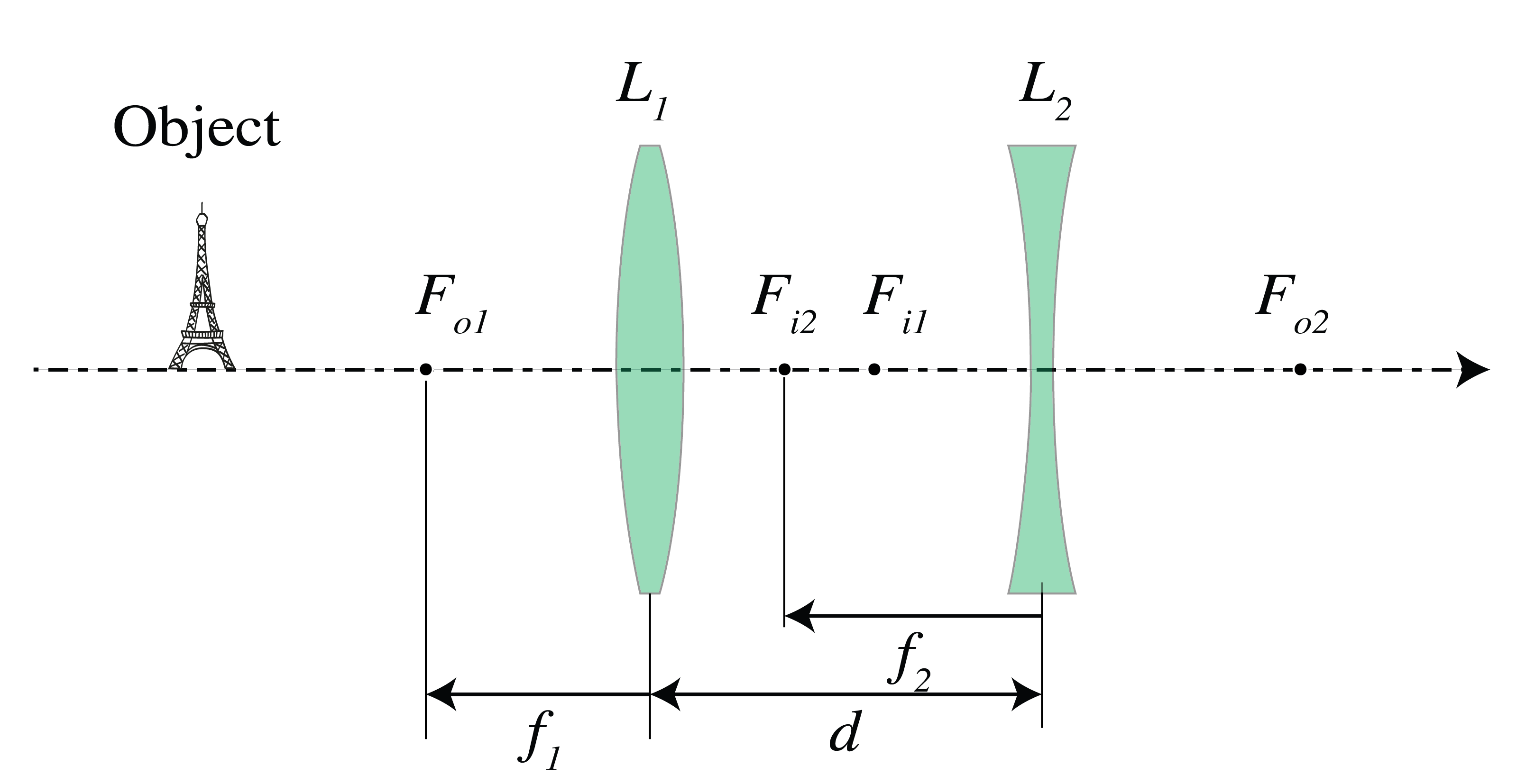
Figure 6:Figure corresponding to Exercise “A convergent and divergent lens”.
(a) Derive the condition on the distance between the lenses such that the final image is real.
(b) Let and . What should be the distance such that the final image is real and the magnification is 2?
Problem 2.6 System matrix for imaging by a spherical surface.
Consider a spherical surface with radius of curvature with to the left (right) of the surface a medium with refractive index ().
(a) Derive the ray matrix between a plane to the left of the surface and at distance to the vertex, and a plane to the right of the surface with distance of to the vertex. (As always the rays are assumed to propagate from the left to the right).
(b) Derive the conditions such that the plane at distance is the image of the plane at distance . Express the formula in coordinates , with respect to the vertex as origin and show that the result is identical to formula eq:geo:single-surface-power-form
(c) Assume that , and cm. Show by construction using the paraxial version of Snell’s Law that when the object is virtual with cm, the coordinate of the image point is given by cm, in agreement with the formula derived in b).
(d) Construct again the image when cm but now for the case that cm and verify that the coordinate of the image point agrees with the formula derived in b).
Problem 2.7 The purpose of this problem is to derive the Lensmaker’s formula for a thin lens by applying the imaging formula of a spherical surface twice. The image of a point as shown in Figure 7 is computed in two steps. First the intermediate image of by the spherical surface with vertex is computed and then this intermediate image is imaged by the spherical surface with vertex .
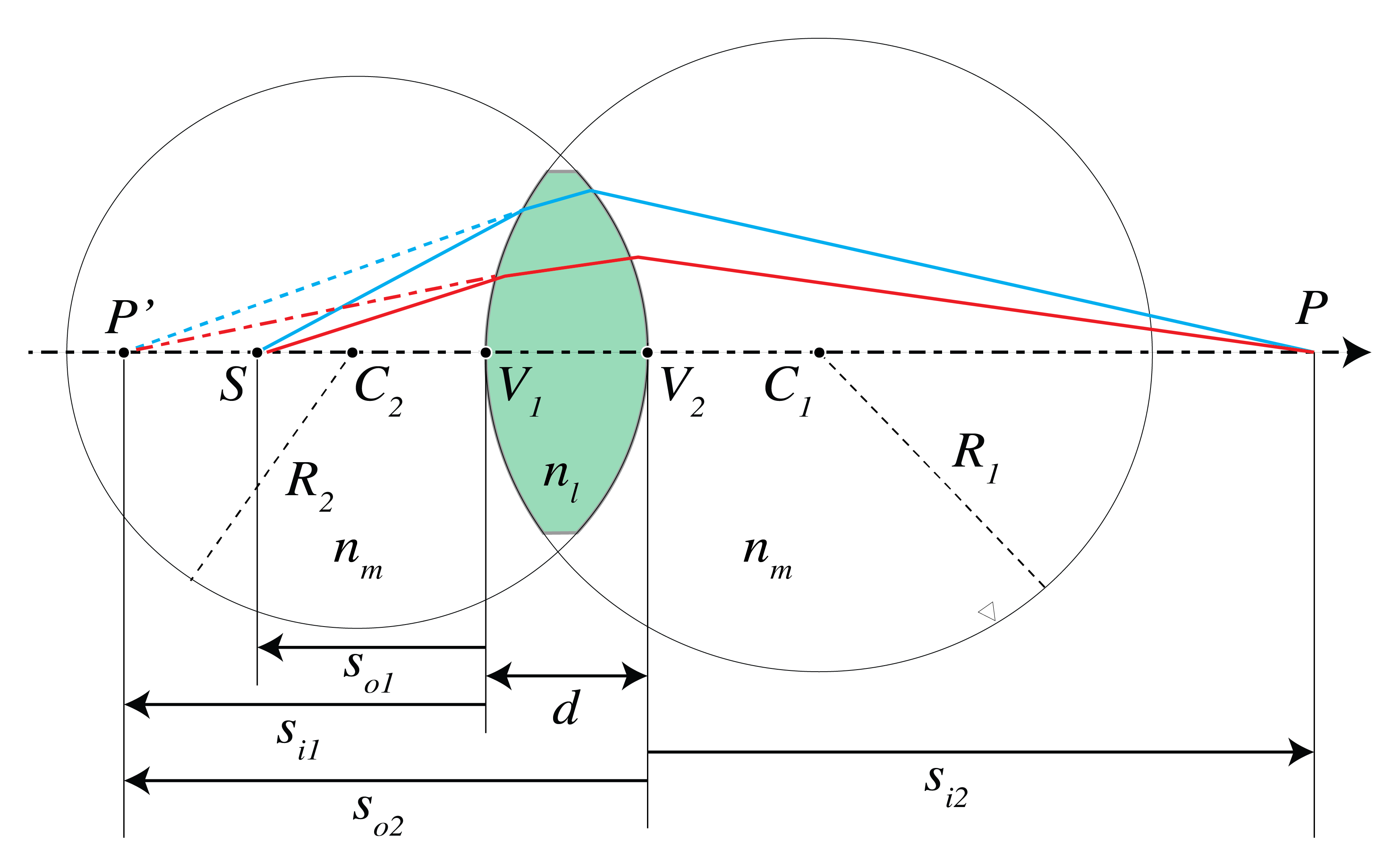
Figure 7:A spherical lens made of glass of index in a medium of index . The point is imaged in .
(a) Use eq:geo:single-surface-power-form to deduce that when is imaged by the first spherical surface as if the second spherical surface were absent, the image has -coordinate with respect to the origin in , of , satisfies:
where is the -coordinate of with respect to the origin in .
(b) Show that with respect to the origin at the -coordinate of is
(c) Show that the -coordinate of P with respect to the origin at satisfies
(d) Add the results of a) and c) to derive
(e) Derive the Lensmaker’s formula for the thin lens (see the Ray Matrix chapter) by taking the limit in d).
Problem 2.8 System matrix for focusing.
Consider a ray transfer matrix
between two planes.
(a) Suppose that any ray that is parallel to the optical axis in the first plane goes through a point on the optical axis in the second plane. This means that the second plane is the image focal plane of the system. What does this imply for the elements of the transfer matrix?
(b) Suppose that the first plane is the object focal plane, so that any ray emitted by the point on the optical axis in the first plane becomes collimated in the second plane. What does this imply for the elements for the transfer matrix?
(c) Consider two thin lenses with distance and focal distances and . Derive the transfer matrix linking the plane immediately before the first lens with the plane immediately behind the second lens. You may assume that the lenses are in air with refractive index .
(d) Use the condition that you found in a) to derive the image focal distance of a system consisting of two thin lenses with image focal distances and and distance . Verify that the result agrees with the distance for the image focal plane Eq. (45). Hint: let be the distance of the image focal point of the two-lens system to the second lens. Write the transfer matrix between the lens immediately before the first lens and the plane through the image focal point.
(e) Add a third thin lens with image focal distance is in contact to the second lens. Derive the ray matrix of this system.
(f) Let be the distance from the image focal plane to the third lens. Use the condition derived in a) and the ray matrix derived in e) to derive .
Problem 2.9 Matrix for two thin lenses.
(a) Consider two thin lenses which are surrounded by a medium with refractive index . Let the left and right lens have power and , respectively and let the distance between their vertices be . Derive that the matrix between the planes immediately to the left of the first lens and the plane immediately to the right of the second lens is given by
(b) Show that the coordinates of the image and object focal points are given by:
(c) Verify that these formulae are equivalent to Eq. (46),Eq. (45).
Problem 2.10 Entrance pupil of a system of two lenses. Consider a system of two lenses and with distance . The left lens has image focal distance and , are the radii of the lens apertures of and .
(a) Let lens be convergent with and let the distance be . Furthermore, let and . Determine by construction with a ruler the entrance pupil. Compute also its position and radius using the Lensmakers’ formula and derive the tangent of the angle that the marginal ray makes with the optical axis for an object on the optical axis at 4 cm to the left of .
(b) Same question when is a divergent lens with , and .
Problem 2.11 Diaphragm in a system of two thin lenses. The purpose of this problem is to determine the entrance and exit apertures of a system consisting of two thin lenses with a diaphragm using three methods: construction, applying the Lensmaker’s formula and the matrix method. The situation is as shown in Figure 8. The focal distances of the two thin lenses are cm and cm and their distance cm. Suppose that the aperture stop is as shown in Figure 8. It is at a distance of cm in front of the lens and has a diameter cm.
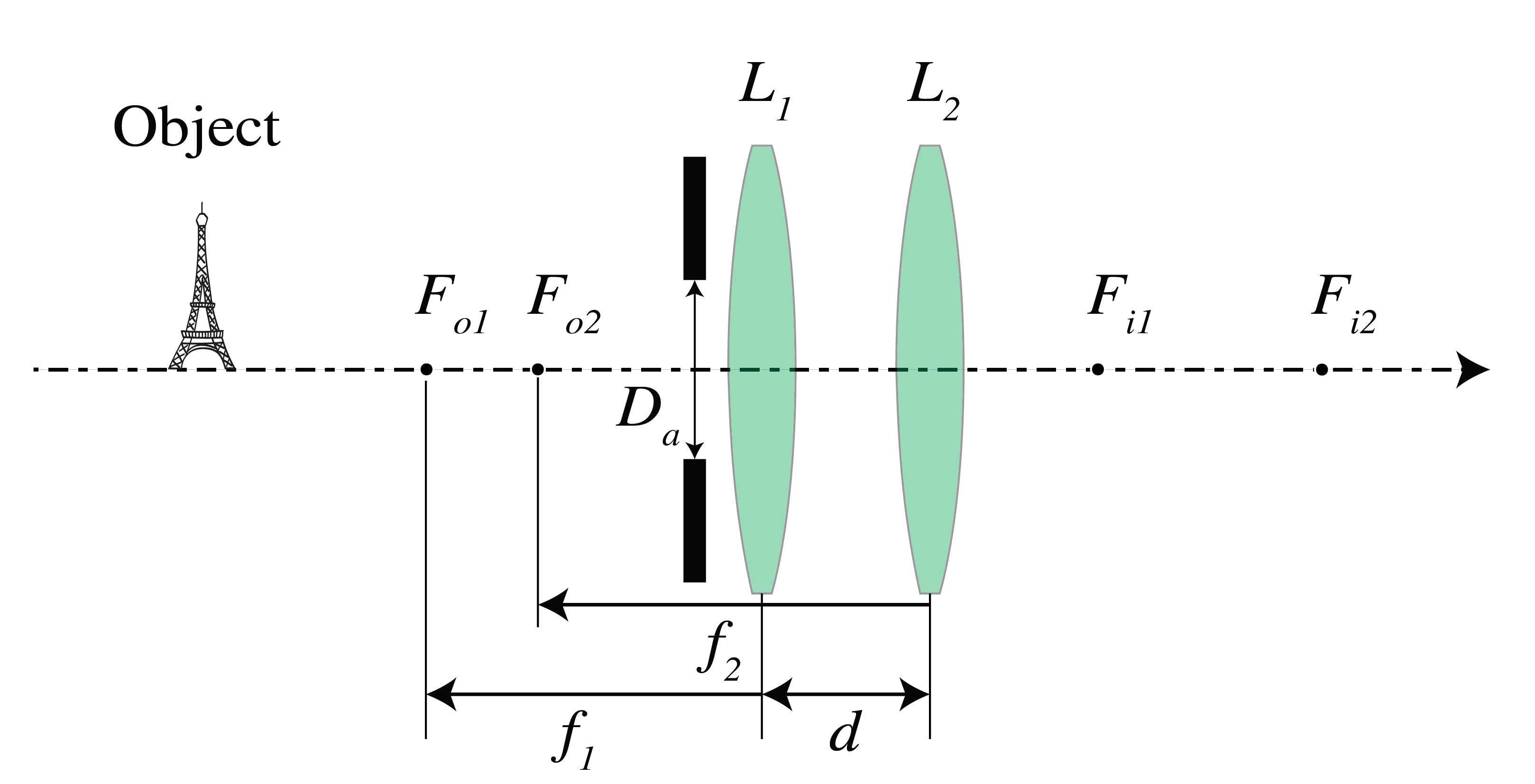
Figure 8:Optical system with two thin lenses and an aperture stop. Lens L₁ (focal length f₁ = 10 cm) and lens L₂ (focal length f₂ = 12 cm) are separated by distance d = 6 cm, with an aperture diaphragm (diameter Dₐ = 5 cm) positioned 1.5 cm in front of L₁. This configuration is used to analyze entrance and exit pupils.
(a) Determine the position of the entrance pupil and its diameter by the mentioned three methods.
(b) Determine the position of the exit pupil and its diameter by the mentioned three methods.
(c) Compute the -number of the system.